 AI Ready Classrooms
Protect
Keep students and information safe.
- Student privacy
- Personally identifiable information
- Approved versus unapproved AI tools
- Age restrictions
- Responsible data practices
- Human review of AI output
AI Ready Classrooms • Safety • Accessibility • Smarter Learning
Help your teachers use AI safely and confidently — protecting student privacy, supporting accessibility, and keeping student thinking visible.
AI Ready Classrooms is an interactive professional-development program that turns broad AI guidance into practical classroom routines your educators can use the next school day.
Professional Development for Schools, Districts & Educator Teams
What Educators Leave With
Participants leave with practical resources such as:
Teacher AI decision guide
Student AI Use Ladder
Assignment AI-use statement template
Learning Evidence Stack
T.R.A.C.E. student verification guide
Prompt-development framework
Classroom scenario activities
AI safety reminders
Accessibility decision framework
One classroom-ready artifact created during the session
Teachers should leave with something they can use, not simply notes about AI.
Why AI Ready Classrooms
Artificial intelligence is changing how students learn, complete assignments, search for information, and communicate.
At the same time, educators are being asked to make increasingly complex decisions about:
AI Ready Classrooms helps educators translate broad AI guidance into decisions they can confidently make in real classrooms.
The goal is not to make every teacher an AI expert. The goal is to give every teacher a safe, repeatable way to make good decisions.
The Framework
Keep students and information safe.
Keep AI from replacing student thinking.
Use technology to remove learning barriers.
Removing the barrier is not removing the rigor.
Turn principles into classroom routines.
Signature Tools
Participants do not leave with only information. They leave with repeatable classroom frameworks and resources they can apply in their own approved technology environment.
A teacher decision framework for determining whether and how AI belongs in a lesson, assignment, or workflow.
Clear language teachers can use to show students how much AI assistance is permitted on an assignment.
A practical approach for preserving evidence of student thinking through process, product, reflection, and proof.
A student verification routine for questioning, checking, correcting, and explaining AI-generated information.
Human-led. AI-assisted. Learning stays visible.
Accessibility & Inclusion
When used appropriately, AI and assistive technology can help remove barriers without changing the learning objective.
Educators explore applications that may support students with:
Access → Thinking → Evidence
Before approving an AI-supported learning strategy, educators consider:
AI Ready Classrooms does not replace an individual student's IEP, Section 504 plan, district policy, or professional educational decision-making.
The Professional Development Experience
Featured program
90-Minute Interactive Professional Development Workshop
Request a Pilot ConversationCertificates and digital badges document completion of the AI Ready Classrooms professional-development program. They do not represent state licensure, university credit, CEUs, or an external professional certification unless separately approved by the participating organization.
Pilot Program
Schools and districts can begin with a focused professional-development pilot rather than launching a large AI initiative immediately.
Request a Pilot ConversationFree Resource
A one-page checklist for school and district leaders covering student privacy, approved tools, academic integrity, accessibility, and follow-up support — the ten things to have in place before educators use AI with students.
Tell us where to send it and the download opens right away.
About the Presenter
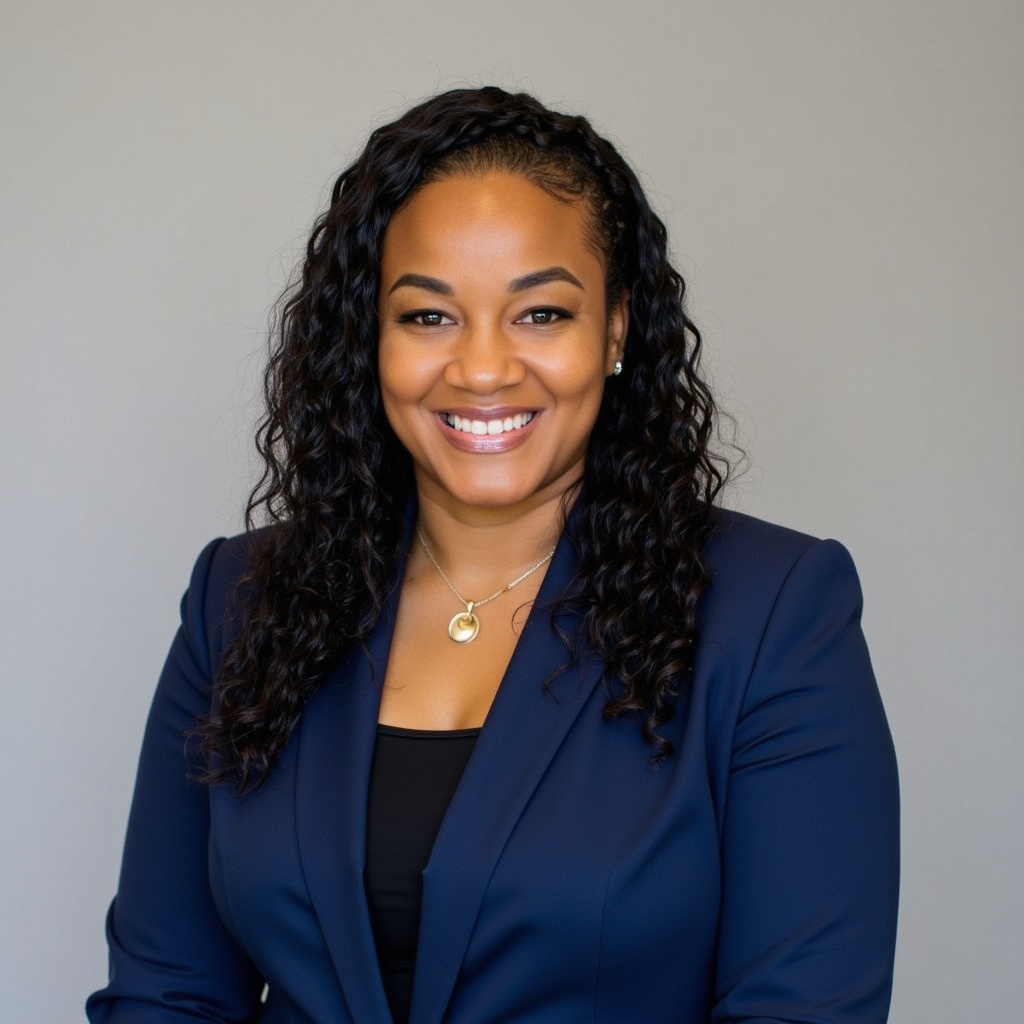
LaShon Williams Moton, MHA, LPN
Doctoral Candidate in Educational Leadership
Capella University
Verify credentialCertified AI Consultant
US Institute of Diplomacy and Human Rights
Verify credentialCertified Prompt Design Professional™ (CPDP)
Academy of Applied AI & Prompt Design — 48 CPD hours, CPD Standards Office Provider 50774

Credentials held by the presenter. Issuing organizations do not endorse AI Ready Classrooms.
LaShon Williams Moton's professional background brings together healthcare, educational leadership, artificial intelligence training, and practical implementation.
Her work with AI Ready Classrooms focuses on helping educators use emerging technology in ways that support teacher judgment, student safety, accessibility, academic integrity, and authentic learning.
Her approach is practical and tool-neutral. The goal is not to promote a particular AI platform, but to help educators develop sound decision-making practices that can be applied within their district's approved technology environment.
For School & District Leaders
AI Ready Classrooms can be adapted to:
AI Ready Classrooms complements district policy. It does not provide legal advice or replace district governance, technology, special education, or student privacy procedures.
Questions from School Leaders
Contact
Interested in a pilot workshop or a brief conversation about your district's professional-development needs?
Start with one team and one 90-minute session. We'll plan it together, deliver it, and review what worked before you expand.
Privacy
Information submitted through the contact form is used only to respond to professional-development inquiries. Please do not include confidential or personally identifiable student information, student records, health information, disability information, or IEP information in any communication sent through this site.